国际传播学会(ICA)2026年会前会:Digital Publics and the Global South
Description
We live in turbulent times when the notion of public, which is central to both understanding communication as a life world phenomenon and studying it as an academic subject, is becoming increasingly contested. Amidst escalating social inequality, political polarisation, violent confrontation, and concentration of communication power and resources, the common ground for sustaining communicative rationality has been eroded to an untenable point. Notably, this erosion is compounded by the rise of AI-driven media ecosystems, which algorithmically shape visibility, amplify affective polarization, and create crises of public trust in institutions and in one another. These technologies, often embedded with political biases, are reshaping digital culture and public opinions, determining what counts as knowledge and who is granted epistemic authority. This in turn has significant consequence on the ways in which we organise our social, cultural, and political life.
The crisis of the public sphere is unfolding against the backdrop of a profound global power shift. The Global South, a historical and political formation rather than a geographical entity, is no longer a passive object of study or a mere recipient of Euro-American theories and technologies but is actively regaining its subjectivities and discursive capacity. Crucially, the global debate on AI governance and ethical digital culture presents a key frontier for this struggle, as Global South nations and communities seek to shape digital futures that reflect their own values and needs.
To what extent are public and counterpublic offering analytical purchase to researching communication in an unequal and fragmented world? Can we, as communication scholars, revitalise the normative power of this pair of concepts as instruments of critique, while also being open to conceptual innovations emanating from the Global South? How have datafication, platformisation, and the generative AI boom—often governed by corporate and geopolitical interests of the Global North— reconfigured the distribution of communication resources, leading to a new agenda for research that considers Global South strategies of resistance, appropriation, and regulatory innovation? With the resurgence of both left-wing and right-wing populism around the globe and major disruptions to the U.S.-led liberal world order, how can we think comparatively about publics and counter publics in different contexts, especially those in the Global South that operate outside or in resistance to this eroding order? What political economic changes or normative values are desirable in the AI-enabled media ecosystems in order to foster progressive movement and inclusive prosperity in the times of uncertainty.
These are the overarching questions that frame the discussions we hope to encourage at this one-day conference.
Objectives
To use public and counterpublic as entry points to unpack emergent empirical phenomena of media and communication, with a dedicated focus on case studies and theoretical contributions from the Global South.
To use extended notions of the public, such as public culture, public diplomacy, public policy, and public trust as some of the key nodes to connect research on structural transformation (e.g., AI governance, platform monopolies) with inquiries into lived experience (e.g., memetic warfare, trust fractures), paying attention to how these structures are experienced differently across the global power divide.
To investigate the role of social media, digital platforms, and emerging technologies—especially artificial intelligence—in shaping contemporary media publics.
To assess the impact of growing geopolitical tensions and divisive forces on the formation and representation of publics in today’s global media landscape.
To identify potential contributors to a special issue that will be published by Communication and the Public on Digital Publics and the Global South.
Date and Time
8:30-17:00, June 4, 2026
Venue
UCT Graduate School of Business Academic Conference Centre, Portswood Road, V&A Waterfront, Cape Town, South Africa
Organizers
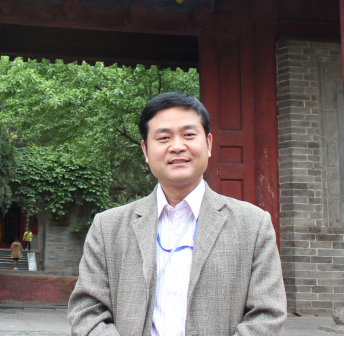
Yu HONG, Zhejiang University, hong1@zju.edu.cn
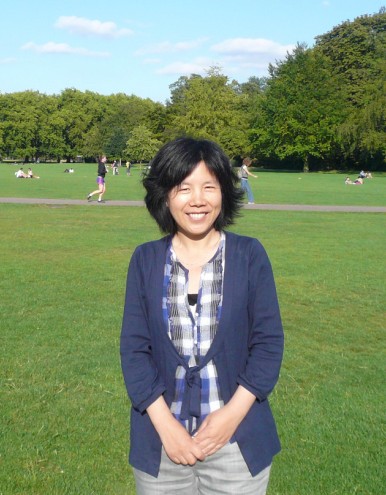
Bingchun MENG, The London School of Economics and Political Science, b.meng@lse.ac.uk
Wei WANG, Zhejiang University, wangwei1115@zju.edu.cn
Keynote speakers
(TBD)
Sponsors
College of Media and International Culture, Zhejiang University
Digital Social Science Transdisciplinary Initiative, Zhejiang University
Communication and the Public
ICA Global Communication and Social Change Division
ICA Communication Law & Policy Division
ICA Public Diplomacy Interest Group
How to Participate
If you wish to present a paper at this event, please send the following documents to communication-public@zju.edu.cn by February 15, 2026, the organizers will consider these submissions and advise on acceptance by March 15, 2026.
1. An abstract of 300-400 words (not including references) as a PDF attachment.
2. Please include your name, title (i.e., independent scholar, graduate student, postdoc, assistant professor, etc.), affiliation/institution if you have one, and preferred email address in the body of the email.
With financial support from the College of Media and International Culture, Zhejiang University, registration fees will be waived for paper presenters (including two teacoffee breaks and lunch). For other participants, it will be $80 for ICA full members and $40 for students.
Note: it is assumed that presenters will be available to attend the event for the full day. If you are coming from overseas, we recommend that you arrive on June 3, 2026, and make appropriate accommodation arrangements for that night. Please note that all travel expenses are to be covered by the presenters themselves.
About Communication and the Public and Zhejiang University as the co-host
Communication and the Public, an international peer-reviewed Open Access journal, publishes both theoretical and empirical research articles in the broadly defined intersections of communication and the public. The journal is listed in the Emerging Sources Citation Index (ESCI) and Scopus and is entering its ten-year anniversary in 2026.
Zhejiang University was founded in 1897 and is one of the earliest modern academies of higher education in China. Its College of Media and International Culture was established in 2006, of which the Department of Journalism was set up in 1958 and is one of the oldest journalism schools in China. Currently, the College has four departments and several research institutes, covering a wide range of research programs in communication studies, journalism studies, new media and critical theory, and international culture. The College is also home for Public Diplomacy and Strategic Communication Research Center, Zhejiang University.